

MA-ID: 731702090
Customer feedback Numex OÜ

Historisch sehr interessante Münze, Transaktion TOP!
Fast shipping and reliable seller.
Snelle levering. Alles naar wens.
Great seller, very responsive to questions. The coin also came a lot faster...
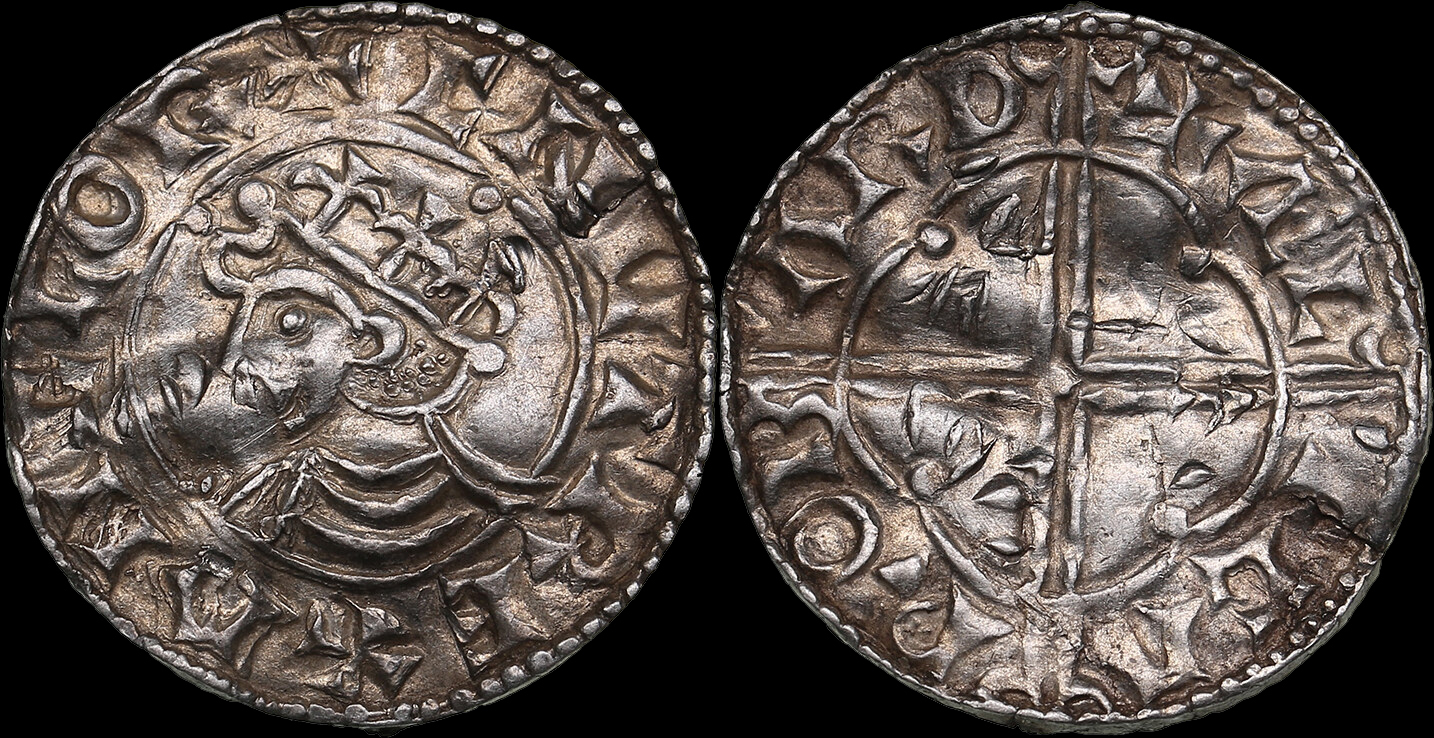
England / Barnstaple Penny (1016-23) Cnut (1016-1035) Quatrefoil type, Ælfgar, RARE! VF
Numex OÜ 
10
On MA-Shops since 10 years
1287 ratings,
99,8 % Positive (last 24 months)
Worldwide shipping
1,057.92 £1250,00 EUR
Import tax may be added
+ 21.16 £ shipping ( to United Kingdom )
Delivery time: 11 - 14 days
+ 21.16 £ shipping ( to United Kingdom )
| Customer Support +49 (0)2871 2180 383 |
| Payment methods |
| Wire Transfer |
Obv: +CNVTREXANGLOR
Rev: +AL FGA ROB ARD
The Barnstaple Penny of Cnut: Quatrefoil Type
The coin under scrutiny is a Barnstaple Penny from the reign of King Cnut of England (1016-1035), known as the Quatrefoil type, minted between 1017 and 1023 by the moneyer Ælfgar. Its rarity is underscored by the specifics:
Country: England
Denomination: Penny
Mint: Barnstaple
Moneyer: Ælfgar
Grade: VF (Very Fine) with peck marks
Catalog Reference: S# 1157, N# 781
Material: Silver
Weight: 0.96 grams
Obverse Inscription: +CNVTREXANGLOR (King Cnut of England)
Reverse Inscription: +AL FGA ROB ARD (Ælfgar of Barnstaple)
Historical Background:
Cnut, often known as Canute, was a Viking leader who became King of England after the death of Edmund Ironside in 1016, establishing a period of significant Viking influence over the British Isles. His reign is marked by several key developments:
Reign: Cnut's rule over England began in 1016 following his victory over Edmund Ironside, leading to his coronation as King of England. His dominion later extended to Denmark and Norway, forming a North Sea Empire.
Coinage Reforms: Cnut introduced several coin types to streamline the currency, enhance its purity, and project his royal authority. The Quatrefoil type, with its distinctive cross within a four-lobed design, was part of this monetary reform effort, symbolizing protection and royal power.
Design Elements:
Obverse: Features a bust of Cnut facing left, surrounded by a quatrefoil. The inscription '+CNVTREXANGLOR' indicates "Cnut King of the English." The quatrefoil design around the king's head was not only decorative but also symbolized the four corners of the kingdom under Cnut's protection.
Reverse: Displays a voided long cross within a quatrefoil, with small pellets in the angles. The inscription '+AL FGA ROB ARD' is an attempt to identify the moneyer Ælfgar and his mint at Barnstaple, though the spelling appears to have been altered or misread due to wear or error in the die.
Condition and Peck Marks:
This coin is graded as Very Fine, indicating that despite its age, it retains much detail. However, the presence of "peck marks" is notable. These are small cuts or marks made on the coin to test its silver content, a common practice in medieval trade, especially by Viking traders who were keen to verify the metal's purity before accepting it in trade.
Numismatic Significance:
The Barnstaple Penny is significant for:
Rarity: Coins from less prominent mints like Barnstaple are inherently rarer, especially in types like the Quatrefoil where fewer examples survive or are recorded.
Historical Context: It reflects the economic and political integration of Viking and Anglo-Saxon elements under Cnut's rule, showcasing the fluidity of power and trade in the early 11th century.
Connection to Danegeld:
The coinage of Cnut, including this Barnstaple Penny, directly connects to the historical practice of Danegeld. Before becoming king, Cnut was part of the Viking forces that received Danegeld payments—tributes paid by the English to prevent Viking raids. These payments were often made in silver like the coin in question. Once in power, Cnut continued this practice, using the wealth not only to pay off potential invaders but also to fund his broader imperial ambitions, which included naval expeditions and the maintenance of his extensive domains. The presence of peck marks on this coin indicates it likely circulated among traders or was tested in transactions involving those who had dealings with or were part of the Viking economy, directly linking it to the Danegeld's legacy.
In conclusion, the Barnstaple Penny of Cnut, with its Quatrefoil type and the visible peck marks, is not just a rare numismatic item but also a historical artifact that illuminates the complex interplay of trade, warfare, and governance in early medieval England. It stands as a testament to Cnut's legacy, the economic practices of the time, and the era's cultural amalgamation under his rule.
Rev: +AL FGA ROB ARD
The Barnstaple Penny of Cnut: Quatrefoil Type
The coin under scrutiny is a Barnstaple Penny from the reign of King Cnut of England (1016-1035), known as the Quatrefoil type, minted between 1017 and 1023 by the moneyer Ælfgar. Its rarity is underscored by the specifics:
Country: England
Denomination: Penny
Mint: Barnstaple
Moneyer: Ælfgar
Grade: VF (Very Fine) with peck marks
Catalog Reference: S# 1157, N# 781
Material: Silver
Weight: 0.96 grams
Obverse Inscription: +CNVTREXANGLOR (King Cnut of England)
Reverse Inscription: +AL FGA ROB ARD (Ælfgar of Barnstaple)
Historical Background:
Cnut, often known as Canute, was a Viking leader who became King of England after the death of Edmund Ironside in 1016, establishing a period of significant Viking influence over the British Isles. His reign is marked by several key developments:
Reign: Cnut's rule over England began in 1016 following his victory over Edmund Ironside, leading to his coronation as King of England. His dominion later extended to Denmark and Norway, forming a North Sea Empire.
Coinage Reforms: Cnut introduced several coin types to streamline the currency, enhance its purity, and project his royal authority. The Quatrefoil type, with its distinctive cross within a four-lobed design, was part of this monetary reform effort, symbolizing protection and royal power.
Design Elements:
Obverse: Features a bust of Cnut facing left, surrounded by a quatrefoil. The inscription '+CNVTREXANGLOR' indicates "Cnut King of the English." The quatrefoil design around the king's head was not only decorative but also symbolized the four corners of the kingdom under Cnut's protection.
Reverse: Displays a voided long cross within a quatrefoil, with small pellets in the angles. The inscription '+AL FGA ROB ARD' is an attempt to identify the moneyer Ælfgar and his mint at Barnstaple, though the spelling appears to have been altered or misread due to wear or error in the die.
Condition and Peck Marks:
This coin is graded as Very Fine, indicating that despite its age, it retains much detail. However, the presence of "peck marks" is notable. These are small cuts or marks made on the coin to test its silver content, a common practice in medieval trade, especially by Viking traders who were keen to verify the metal's purity before accepting it in trade.
Numismatic Significance:
The Barnstaple Penny is significant for:
Rarity: Coins from less prominent mints like Barnstaple are inherently rarer, especially in types like the Quatrefoil where fewer examples survive or are recorded.
Historical Context: It reflects the economic and political integration of Viking and Anglo-Saxon elements under Cnut's rule, showcasing the fluidity of power and trade in the early 11th century.
Connection to Danegeld:
The coinage of Cnut, including this Barnstaple Penny, directly connects to the historical practice of Danegeld. Before becoming king, Cnut was part of the Viking forces that received Danegeld payments—tributes paid by the English to prevent Viking raids. These payments were often made in silver like the coin in question. Once in power, Cnut continued this practice, using the wealth not only to pay off potential invaders but also to fund his broader imperial ambitions, which included naval expeditions and the maintenance of his extensive domains. The presence of peck marks on this coin indicates it likely circulated among traders or was tested in transactions involving those who had dealings with or were part of the Viking economy, directly linking it to the Danegeld's legacy.
In conclusion, the Barnstaple Penny of Cnut, with its Quatrefoil type and the visible peck marks, is not just a rare numismatic item but also a historical artifact that illuminates the complex interplay of trade, warfare, and governance in early medieval England. It stands as a testament to Cnut's legacy, the economic practices of the time, and the era's cultural amalgamation under his rule.
Info / FAQ


Information
Online orders are welcome as always and will be shipped directly.
|
Withdraw from contract here Seller Home | 0Shopping cart | Terms of sale | Contact | MA Terms of sale | Privacy policy | Warranty | MA-Shops New Items Copyright ® 2001-2026, MA-SHOPS Coins All Rights Reserved. Designated trademarks and brands are the property of their respective owners. |